For foreign professionals considering a job change in Japan, non-compete agreements and NDAs signed at entry or exit directly affect your career freedom. Yet many sign Japanese-language contracts without fully understanding them, leading to disputes when they try to move. This article explains how these clauses work, when they are enforceable, and what to check before signing.
競業避止義務とは何かWhat is a non-compete obligation
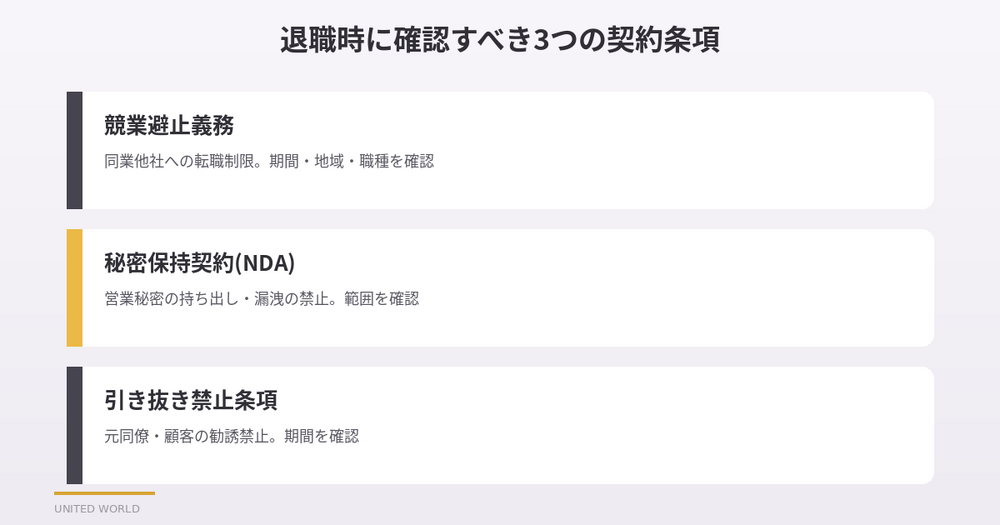
競業避止義務とは、退職後に同業他社への転職や同業種での起業を一定期間制限する義務です。
在職中 vs 退職後の違い: ・在職中:労働契約の付随義務として当然に発生。就業規則や誓約書がなくても、信義則上の義務として認められる ・退職後:明確な合意(誓約書・就業規則)がなければ原則として義務は消滅 ・日本国憲法は「職業選択の自由」を保障しており、退職後の競業制限は合理的な範囲でしか認められない
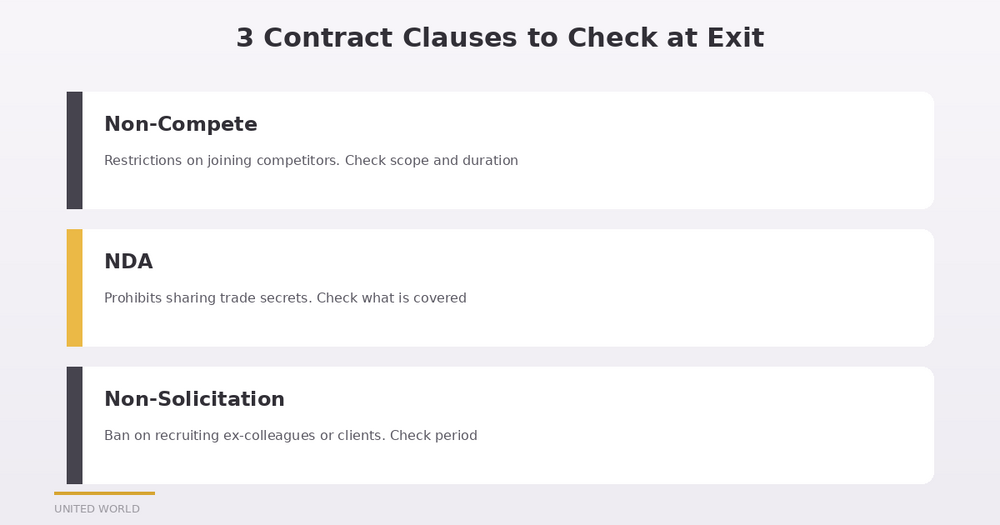
A non-compete obligation restricts you from joining competitors or starting a competing business for a set period after leaving.
During employment vs after: - During: Implied by labor contract. Exists even without a signed agreement - After: Without explicit agreement (oath or work rules), the obligation generally ends - Japan's Constitution guarantees 'freedom of occupation' - post-exit restrictions must be reasonable
Key fact: Overly broad post-exit non-competes are frequently ruled invalid by Japanese courts.
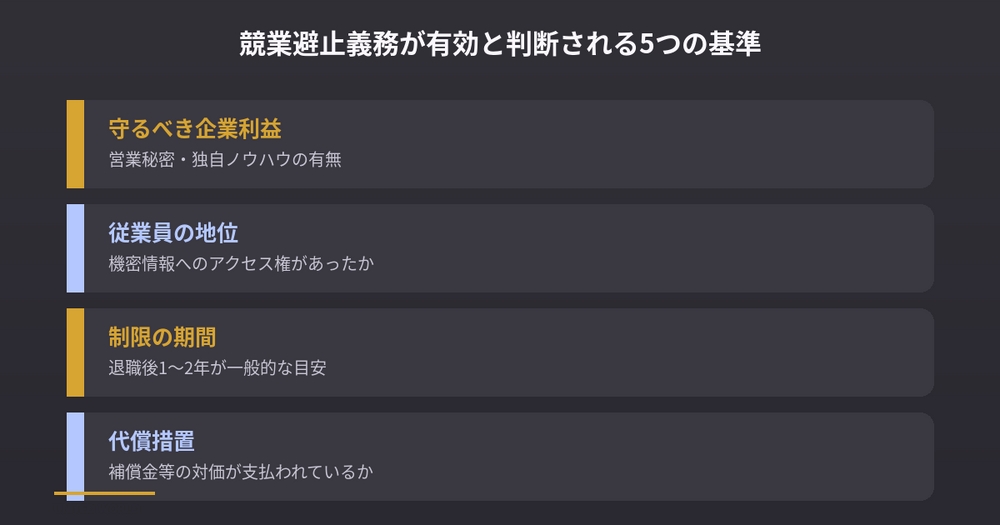
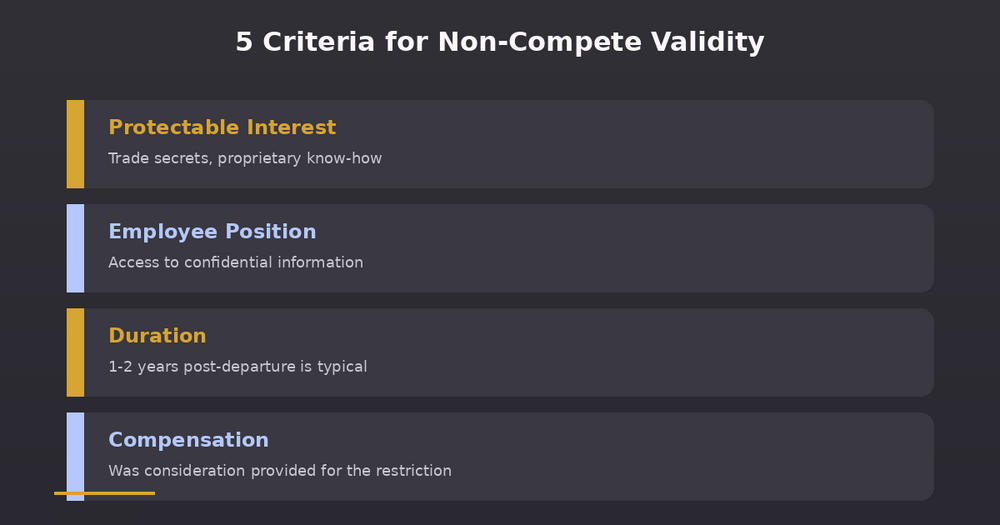
競業避止義務が有効と判断される5つの基準5 criteria courts use to judge validity
An NDA prohibits disclosing confidential information learned during employment, even after you leave.
NDA vs Non-Compete: - NDA: 'Do not leak information' - does not restrict where you work - Non-Compete: 'Do not join competitors' - restricts your next employer - NDAs are more broadly enforceable than non-competes
Warning:NDA violations can result in damages claims, injunctions, and criminal penalties under the Unfair Competition Prevention Act (up to 10 years imprisonment or 20M yen fine).
外国籍人材が署名前にチェックすべき5つのポイント5 points to check before signing
1. DurationUnder 1 year is generally reasonable. Over 2 years: caution. No stated period: ask
2. What is restricted'All competitors everywhere' is excessive. Is it limited to specific roles/duties?
3. Geographic scope'All of Japan' or 'worldwide' is likely too broad to be enforceable
4. CompensationIs payment offered for the restriction? Without it, enforceability drops significantly
5. LanguageIf you cannot read the Japanese contract, request a translation. Do not sign what you do not understand
Can you refuse to sign? At hiring, it is difficult in practice. At exit, you can legally decline. Either way, understanding the content and negotiating terms is always your right.
転職時に競業避止義務が問題になるケースと対処法When non-competes become a problem and how to handle it
Likely NOT a problem: - Restriction period has expired - New role is in a different field - You were general staff with no access to secrets - No compensation was paid (likely invalid) - Scope is excessively broad (likely invalid)
Likely IS a problem: - You were a manager or engineer with deep access to secrets - You signed an exit oath and received compensation - You are working on the same clients/projects at your new job - You are using former trade secrets in your new role
How to handle: - Consult a recruitment agent to assess whether the clause affects your move - Have a lawyer review the clause for enforceability - Disclose the non-compete to your new employer - it is the safe approach - If unsure, ask your former HR department whether your move is in conflict
まとめ:契約書は「署名前」に理解する。署名後では遅いSummary: Understand before you sign - after is too late
NDAProhibits leaking secrets. Does not restrict where you work. Violations = damages
Most importantDo not sign Japanese contracts you do not understand. Request a translation
No compensationHigh chance the non-compete is unenforceable. But do not self-judge
A contract binds you the moment you sign it. Foreign professionals often sign Japanese-language clauses without full understanding. If you have any doubt, consult an agent, lawyer, or immigration specialist before signing.
Concerned about contract clauses?
United World Inc. specializes in career support for foreign white-collar professionals.
United World support includes: - Advisory on non-compete and NDA clauses at exit - Contract condition verification at target companies - Visa and contract risk pre-screening - Success-fee model - zero cost for job seekers
LinkedIn・履歴書・職務経歴書はどれも任意です。1つでもご提出いただくと、よりスムーズに求人をご紹介できます。LinkedIn, resume and CV are all optional. Sharing any one of them helps us introduce jobs faster.