Work Visa Complete Guide - Visa Types and Requirements Every Foreign Professional Must Know

2026.06.22

  • Career Advice
就労ビザ完全ガイド――外国籍プロフェッショナルが知るべきビザの種類と取得要件

Working in Japan requires a work visa (residence status). But the system is complex, and knowing which visa applies to you, what documents are needed, and how long the process takes can be overwhelming.

In 2026, major changes include a new Japanese language requirement for the Engineer/Humanities visa, stricter PR screening, and tighter controls on dispatched workers. This article provides a complete, up-to-date guide to the visa types and requirements that matter most for foreign white-collar professionals.
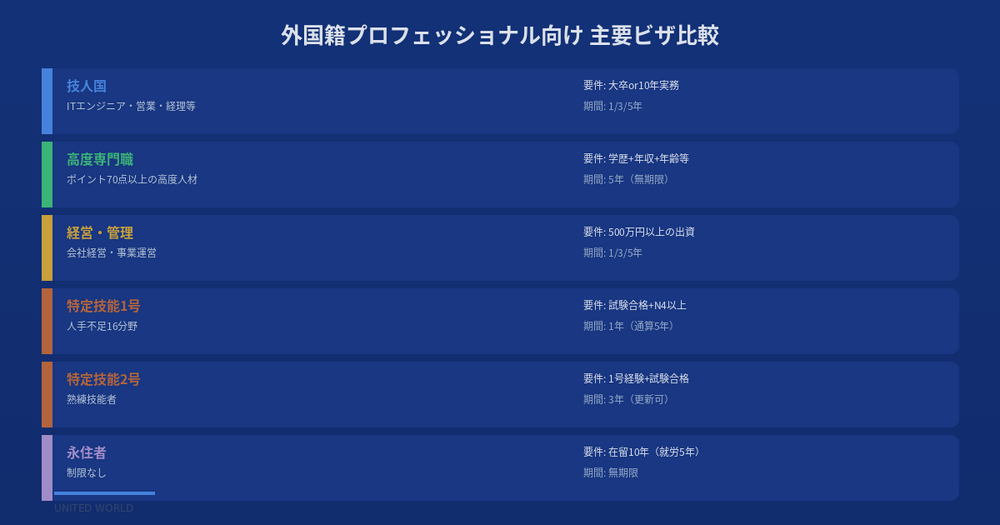
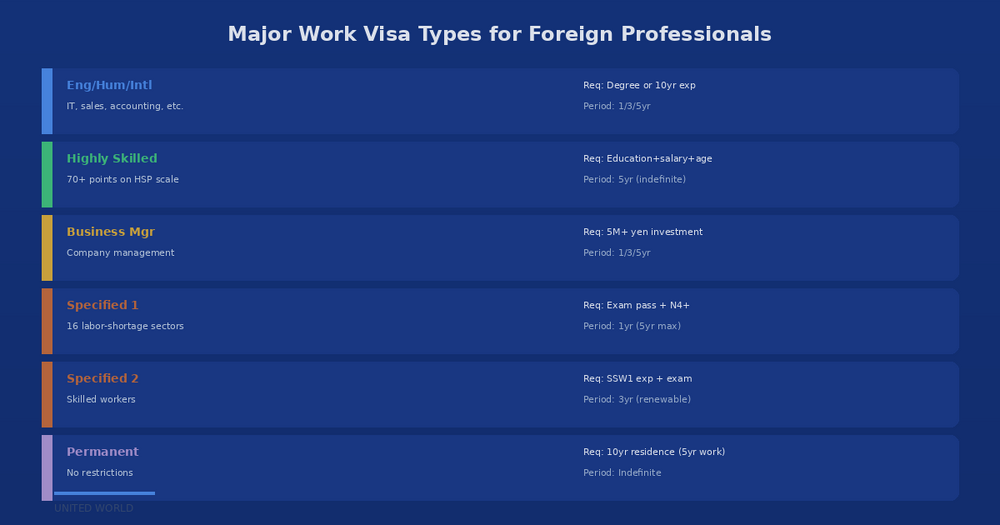
6 major visa types for foreign professionals


1. Engineer/Specialist in Humanities/International Services (Gi-Jin-Koku)

The most common visa for foreign white-collar professionals. Covers IT engineers, sales, accounting, marketing, translation, etc.

Requirements: University degree (bachelor+) or Japanese vocational school diploma, or 10+ years of relevant work experience (3 years for international services). Business content must match qualifications.

2026 change: From April 15, JLPT N2 proof required for client-facing roles (translation, customer service, etc.).

2. Highly Skilled Professional (HSP)

Points-based elite visa with significant benefits.

Score 70+ points based on education, experience, salary, and age. Benefits include 5-year stay, spouse work permission, and fast-track to PR (70pts = 3 years, 80pts = 1 year).

3. Business Manager

For starting or managing a business in Japan. Requires 5M+ yen investment or hiring 2+ full-time employees.

4. Specified Skilled Worker (SSW 1 and 2)

SSW1: 16 labor-shortage sectors. Exam pass + JLPT N4+. Max 5 years. No family.
SSW2: Skilled workers. Renewable stay, family allowed, path to PR. Over 336,000 holders as of June 2025.

5. Permanent Resident

Requires 10+ years of residence (5+ years of work). HSP 70+ points: PR in 3 years. 80+ points: PR in 1 year. No work restrictions. Housing loans possible. 2026+: stricter screening - tax/insurance payment history now scrutinized.

The visa application process


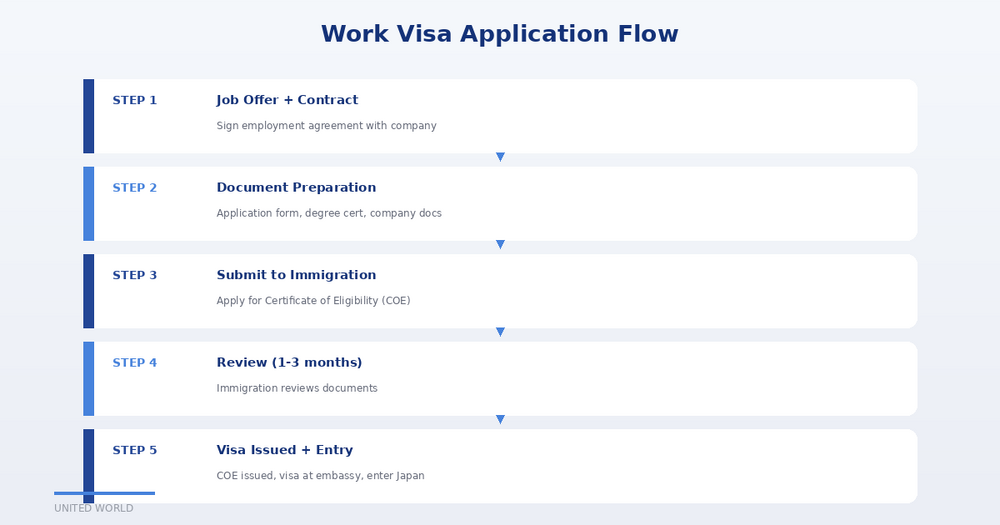
The standard process for new entry from overseas:
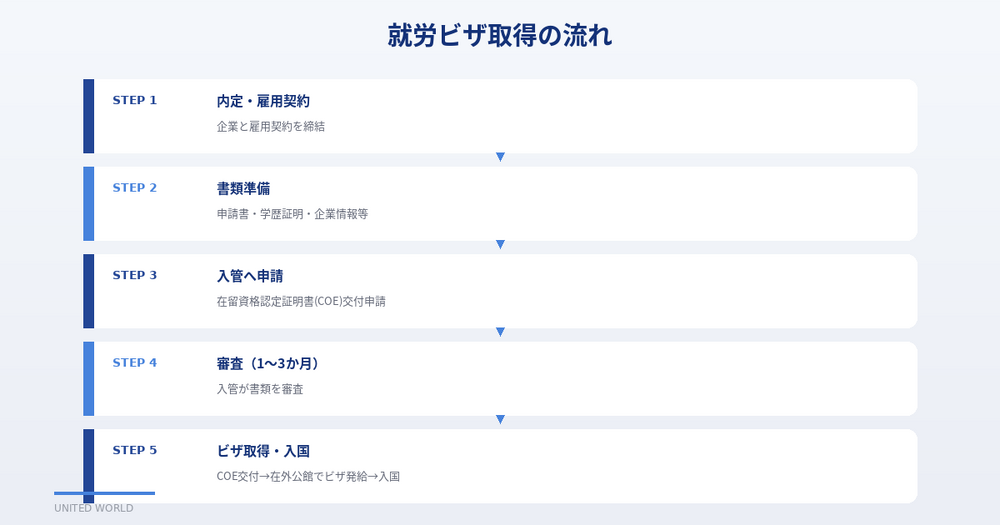
STEP 1: Job offer + contractSign employment agreement. Job duties must match the visa category
STEP 2: Document preparationApplication form, degree certificate, company registration, contract, etc.
STEP 3: Submit to immigrationCompany submits COE (Certificate of Eligibility) application
STEP 4: Review (1-3 months)Immigration reviews all documents
STEP 5: Visa issuedCOE issued, visa at Japanese embassy abroad, enter Japan, receive Residence Card
For job changers:
- Same visa scope: Apply for Employment Eligibility Certificate (recommended)
- Different visa scope: Change of Status application required
- Must notify immigration within 14 days of changing employer

2026 regulatory changes summary


1. Japanese language requirement for Gi-Jin-Koku (Apr 15, 2026)
- Client-facing roles now require CEFR B2 (JLPT N2+) proof
- Japanese university/vocational school grads are exempt
- Category 1-2 companies (listed firms) are exempt from document submission
2. PR screening tightened
- Social insurance and tax payment history now reviewed
- PR revocation system launches 2027
- MyNumber-linked payment data sharing begins 2026+
3. Dispatched worker scrutiny (Mar 2026)
- Stricter verification of actual work at dispatch destinations
- Crackdown on simple labor disguised as specialist work
4. SSW expansion
- 336,000+ holders as of June 2025 (record high)
- Some sectors (food service) temporarily paused new intake
- SSW2 holders growing (3,000+)

Frequently asked visa questions


Does my visa expire if I change jobs?No, but if you do not find new employment within 3 months, it may be revoked. 14-day notification is mandatory
Can I do side work?With Gi-Jin-Koku: yes, within your visa scope. SSW: generally no
Can I bring my family?Gi-Jin-Koku, HSP, SSW2: yes. SSW1: no
When can I apply for PR?10 years of residence (5 years work). HSP 70pts: 3 years. 80pts: 1 year
What if renewal is denied?A 30-31 day Designated Activities visa for departure prep is issued. Re-application is possible

5 rules to prevent visa trouble


Rule 1Always secure your next job before resigning
Rule 2Notify immigration within 14 days of changing employers
Rule 3Pay social insurance and taxes on time without exception (critical for PR)
Rule 4Track your visa expiry and apply for renewal 3 months in advance
Rule 5When in doubt, consult an expert (immigration lawyer or recruitment agent)

Visa problems cannot be excused by ignorance. A recruitment agent can pre-check visa risks before you make a job change.

Summary: Master your visa, master your career


Gi-Jin-KokuMost common. Degree or 10yr exp. 2026: Japanese requirement added
HSP70+ points. PR in as little as 1 year
SSW16 sectors. 336K+ holders. SSW2 opens path to PR
PR10 years residence. 2026+: stricter. Tax/insurance payment is key

Your visa is not a one-time task but a strategic asset to manage at every career stage. Proactive planning around visa risks, PR eligibility, and regulatory changes is what separates successful foreign professionals in Japan.


Need visa guidance with your job search?

United World Inc. specializes in career support for foreign white-collar professionals.

United World support includes:
- Visa compatibility check and change-of-status guidance
- HSP points calculation support
- Pre-screening visa risks before job changes
- Success-fee model - zero cost for job seekers

Contact United World Inc. here

Services for hiring companies


back to the list

TOP