Can I work for a Japanese company without living in Japan? Since the pandemic-driven remote work revolution, the answer has become a conditional YES.
Full remote employment from overseas, freelance contracting with Japanese firms, and the Digital Nomad visa launched in March 2024 - multiple paths now exist. However, cross-border remote work comes with three critical hurdles: visa, tax, and social insurance. This article provides practical guidance for foreign professionals who want to work for Japanese companies from abroad.
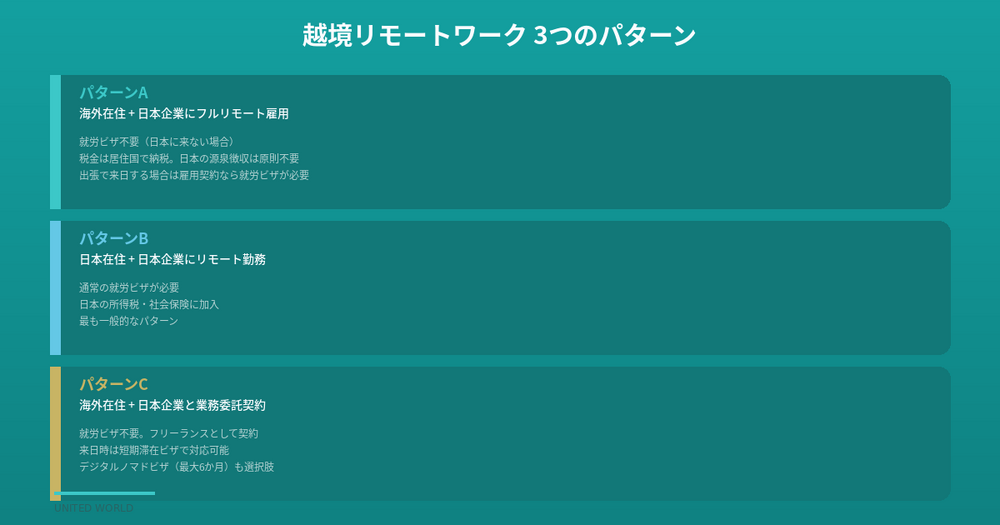
越境リモートワーク 3つのパターン3 cross-border remote work patterns
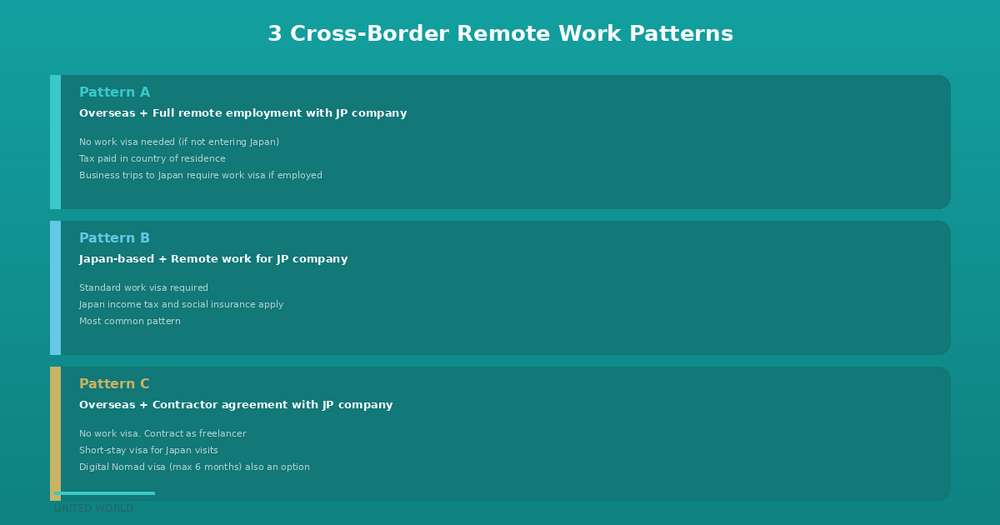
Pattern A: Overseas + Full remote employment with a Japanese company
Visa:No work visa needed as long as you do not enter Japan Tax: Taxed in your country of residence. Japan income tax generally does not apply (except director compensation) Note: If you travel to Japan for business, a work visa IS required under an employment contract Insurance: Japan social insurance may apply in some cases (law is still evolving)
Pattern B: Japan-based + Remote work for a Japanese company
Visa:Standard work visa (Engineer/Humanities/International Services, etc.) required Tax: Taxed as Japan resident on worldwide income Insurance: Japan health insurance and pension
Pattern C: Overseas + Contractor agreement with a Japanese company
Visa:No work visa needed (if not entering Japan) Tax: Taxed in country of residence. No Japan withholding in principle Japan visits: Short-stay visa (no paid work in Japan allowed) Option: Digital Nomad visa (max 6 months, for overseas company work)
デジタルノマドビザとは? 2024年開始の新しい選択肢What is the Digital Nomad visa? A new option since 2024
Japan launched its Digital Nomad visa (Designated Activities) in March 2024 - a new residence status for foreigners working remotely for overseas companies while in Japan.
Requirements: - Eligible: Nationals of visa-exempt countries - Stay: Maximum 6 months (no renewal) - Income: Annual income of 10 million yen or more - Medical insurance required - Must be working for an overseas company (not a Japanese employer) - No side jobs or part-time work allowed - No Residence Card issued
Key point:The Digital Nomad visa is NOT for working at a Japanese company. It is for people employed by overseas companies who want to live in Japan temporarily. To work for a Japanese company, you need a standard work visa.
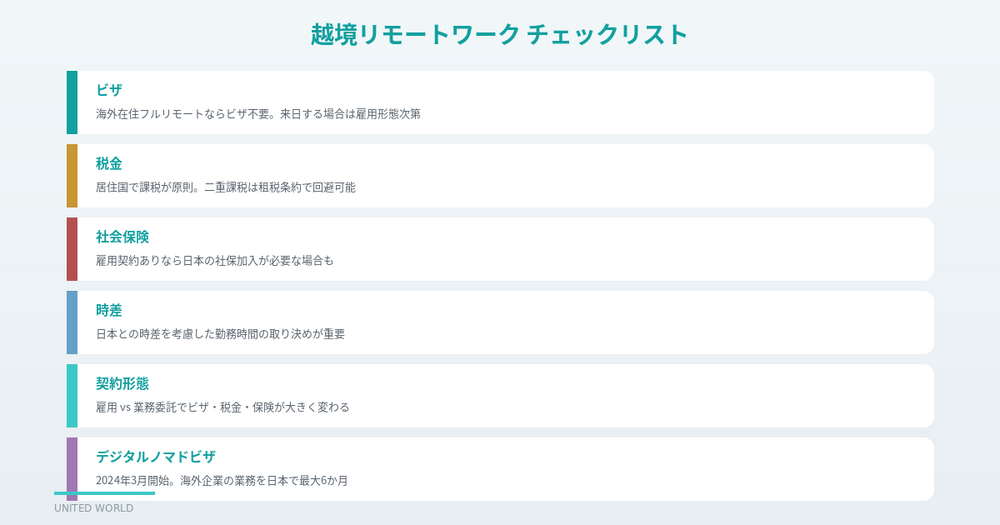
越境リモートワークの実務チェックリストCross-border remote work checklist
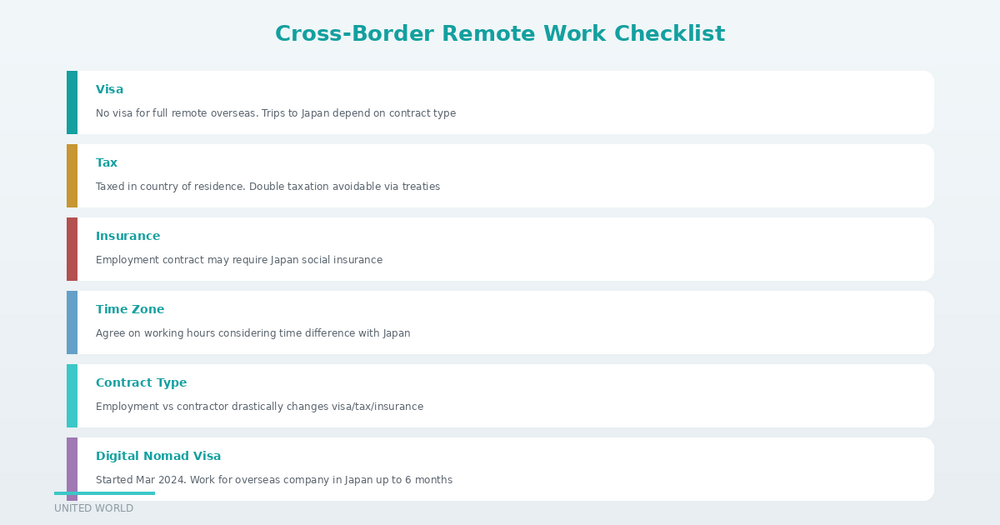
Before starting cross-border remote work, confirm these 6 items:
1. Contract typeEmployment vs contractor fundamentally changes visa, tax, and insurance rules
2. Visa requirementFull remote from overseas = generally not needed. Planning Japan trips? Check
3. Tax (double taxation risk)Check the tax treaty between your country and Japan. Consult a tax advisor
4. Social insuranceEmployment contract may trigger Japan social insurance obligations
5. Time zone managementAgree on working hours and meeting times considering Japan time difference
6. Labor law jurisdictionYour country of residence labor law may apply. Clarify in the contract
Cross-border remote work is an area where regulations have not caught up with reality. For tax and social insurance in particular, consulting a specialist (international tax advisor or immigration lawyer) is strongly recommended.
日本企業のリモートワーク対応状況How ready are Japanese companies for remote work
近年はEOR(Employer of Record:代替雇用)サービスの普及も進んでいます。EORを利用すれば、日本に法人を持たない海外企業でも、日本在住の人材を「日本の法律に準拠した形で」雇用できるようになります。逆に、日本企業が海外在住の外国人を雇用する際にも、居住国のEORを活用するケースが増えています。
Even if you want to work remotely from overseas, the company must support remote arrangements.
Companies open to remote: - Foreign tech firms (Google, Amazon - global remote is standard) - IT startups (full remote and flex are the norm) - Globally-oriented Japanese IT companies - Companies hiring engineers on contractor basis
Companies where remote is difficult: - Traditional Japanese large firms (in-office culture persists) - Client-facing roles requiring in-person meetings - Manufacturing (factory work is primary) - Regional SMEs
The growth of EOR (Employer of Record) services is also opening new doors. EOR allows companies without a Japan entity to hire Japan-based talent in compliance with Japanese law - and vice versa, Japanese companies can use overseas EOR to hire foreign professionals in their home countries.
外国籍プロフェッショナルへの実践アドバイスPractical advice for foreign professionals
Want to work for a JP company without relocatingContractor agreements are the simplest path. IT engineers are in high demand
Want to live in Japan and work remotelyGet a work visa and target remote-friendly companies
Want to stay in Japan as a digital nomadDigital Nomad visa is for overseas company work only. 10M yen income required
Worried about taxesConsult an international tax specialist. Double taxation is avoidable via treaties
Not sure where to startA recruitment agent experienced in cross-border work is your fastest path
The key is to clarify where you want to live and which contract type fits best. Once that is decided, visa, tax, and insurance details can be sorted with the right experts.
まとめ:海外在住でも日本企業で働ける時代が来ているSummary: Working for a Japanese company from anywhere is now possible
Pattern A (Overseas + employed)No visa (except for trips). Tax in residence country
Pattern B (Japan-based + remote)Work visa required. Japan tax and insurance
Pattern C (Overseas + contractor)No visa. Tax in residence country. Simplest
Digital Nomad visaOverseas company only. Max 6 months. 10M yen income
Remote work has made it possible to work for a Japanese company without living in Japan. But navigating visa, tax, and insurance requirements correctly requires expert guidance.
Considering working for a Japanese company from overseas?
United World Inc. specializes in career support for foreign white-collar professionals.
United World support includes: - Remote-friendly Japanese company listings for overseas candidates - Support for Japan-based and overseas foreign professionals alike - Visa and contract type consultation - Success-fee model - zero cost for job seekers
LinkedIn・履歴書・職務経歴書はどれも任意です。1つでもご提出いただくと、よりスムーズに求人をご紹介できます。LinkedIn, resume and CV are all optional. Sharing any one of them helps us introduce jobs faster.